Wednesday, 27 November 2019

Audience theory 2 - blog tasks

Theory questions and your opinion

1) Social learning theory has been criticised for simplifying the causes of violence in society. Do you think the media is responsible for anti-social behaviour and violence?
I believe it can be, but media is not exclusively responsible for anti-social behaviour and violence. For example, if a parent is neglectful and doesn't teach and look after their child properly, that child will likely grow up to be anti-social and violent anyway. But they could also learn from other influences around them such as movies and TV and, if they're young enough, be negatively influenced by the violent media. If somebody is anti-social and violent, I don't believe media will ever exclusively be the reason for that behaviour.

2) How is social learning theory relevant in the digital age? Are young people now learning behaviour from social media and the internet? Give examples.
Young people definitely learn behaviour from social media and the internet. For example, make-up tutorials and clothing hauls can be big influences to what clothing or make-up a young person would buy.

3) Research three examples of moral panic from the last 50 years. To what extent was the media responsible for these moral panics? Was the concern in society justified? How have things changed as a result of these moral panics?
1) The 1980s AIDS epidemic caused a moral panic due to the media attention it was getting. Outlets nicknamed it the 'gay plague', further stigmatising the disease and fear mongering. The government put out an advertisement that suggested the moral panic was due to the lack of accurate information about the disease. It was also apparent that the homophobia present in the media (and society) at the time was prevalent in perpetuating stereotypes about gay people and misinformation about AIDS.
2) Although starting in the 1970s, the moral panic regarding violence and video games is still prevalent today. Exaggerated news stories and headlines help perpetuate the idea that playing violent video games are causing children to become violent. There have been attempts to regulate violent videos games in the United States, however in 2011, the U.S. Supreme Court ruled that legally restricting sales of video games to minors would be "unconstitutional". In 1999, the public concern reach a peak as many blamed violent video games such as Doom for the Columbine high school shooting.
3) After the 2001 9/11 attacks, there was an unsurprising moral panic about terrorism and Islamic extremism that especially spread throughout the United States. The widespread coverage of the incident, as well as the "War on Terror" in the United States, created fear and prejudice in society of Muslims.
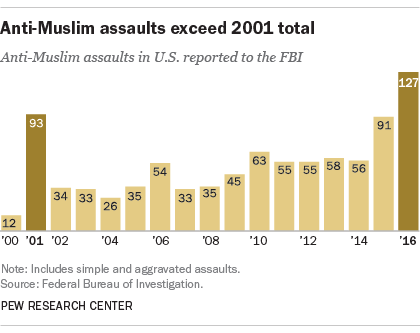
There was a significant increase in hate
crimes against Muslims and Arabs in
2001.

4) Read this introduction to an academic paper on technopanics. What examples are given of technopanics that create fear in society?
Examples given are child safety, digital privacy, and cybersecurity.

5) Do you think the internet should be regulated? Should the government try and control what we can access online?
The government controlling what we access online is important for the safety of society. The most obvious example is blocking access to dangerous websites that sell things such as illegal services, guns, drugs ect. I also believe that age restricting content unsuitable for minors is something that is important morally. However, regarding age restrictions, the main problem is that it's usually very easy to get around and oftentimes doesn't work due to anonymity of the internet. Despite this, I still believe that without any attempt to restrict inappropriate content for minors it would be much easier for minors to access it, and so even just asking the question "Are you over 18?" is important.
I do believe that attempting to regulate anything other than that would be censorship however, and would be dangerous to our democratic society and threaten free speech.

6) Apply Gerbner's cultivation theory to new and digital media. Is the internet creating a fearful population? Are we becoming desensitised to online threats, trolling and abuse? Is heavy internet use something we should be worried about in society? Write a paragraph discussing these ideas.
Gerbner's cultivation theory suggests that heavy viewers of the television were exposed to more violence and crime, and so were affected by 'mean world syndrome'. I honestly believe that the extent to which your viewpoint on the world is affected by the TV and internet is much more dependent on the person than Gerbner's theory suggests; somebody could simply have a much more anxious personality than somebody else. However, there is never not going to be a negative news story covered on the internet, and so the constant sense of threat and danger is undeniably present online.
The internet has, in many ways, made us desensitised to the effects we have on others. The sheer amount of death threats and abuse thrown around at people online is staggering but - due to the anonymity of the internet - we don't have to think about our actions and the effects they can have. Essentially, although many won't pay mind to a death threat, there are many who will. Since so many people's lives revolve around the internet, it's much harder to ignore frequent bullying and abuse, and so heavy internet use is definitely something that we should worry about in society.


The effects debate: Media Factsheet

Complete the following tasks using Media Factsheet 030 - The Effects Debate available on the Media Shared drive. You'll find it in our Media Factsheet archive: M:\Resources\A Level\Media Factsheets. Remember, you can't access these at home so make sure you save the factsheet to a USB/Google Drive or email it to yourself so you can complete the work at home.

Read Media Factsheet 030 - Media and Audiences -The Effects Debate and answer the following questions:

1) Complete the questions in the first activity box (beginning with 'Do you play violent games? Are you violent in real life?')
1. Do you play violent video games and/or watch violent films? Are you violent in ‘real life’? 
> I don't often play many violent video games, but some of my favourite TV shows showcase lots of violence. I wouldn't consider myself a violent person.
2. Do you ever see a product advertised on TV or on the internet and decide you want to buy it? 
>I have, but I rarely go through with actually buying it. It's more of a "I would get that if I had money" feeling than an actual commitment to buying a product.
3. Have you ever seen a documentary which has drawn your attention to an issue which you now feel strongly about?
>Not particularly.
2) What are the four categories for different effects theories?
• Diffusion Theories
• Direct Effect Theories
• Indirect Effect Theories
• The Pluralist Approach

3) What are the examples provided for the hypodermic needle theory - where media texts have been blamed for certain events? 
• Child’s Play – The murder of Jamie Bulger
• Marilyn Manson – The Columbine High School shootings
• Natural Born Killers – a number of murders committed by
romantically linked couples. in one case, the director was sued
for inciting violence although the court case was later dismissed

4) What was the 1999 Columbine massacre? You may need to research this online in addition to the information on the factsheet.

The 1999 Columbine massacre was the deadliest school shooting in US history at the time. 2 Teenagers killed 12 students, including themselves, and 1 teacher, while harming many more. It inspired copycat shootings as well as causing moral panics over teenagers use of internet and violent video games.
5) What are the reasons listed on the factsheet to possibly explain the Columbine High School massacre?
o The ease of access to firearms and the social acceptance of gun ownership
o The alienation felt by teenagers who felt as though they did not fit in
o The hopelessness caused by living in an area where unemployment was high and was economically disadvantaged
o The general desensitisation caused by access to a range of violent images: film, TV, the news, the internet

6) How does the factsheet describe Gerbner's Cultivation theory?

This theory considers the way the media affects attitudes rather than behaviour.

7) What does the factsheet suggest about action films and the values and ideologies that are reinforced with regards to violence?

Violence for a ‘good’ reason is acceptable and violence for a ‘bad’ reason must be punished.  

8) What criticisms of direct effect theories are suggested in the factsheet?

It suggests the theory has an elitist element suggesting a judgement is being made about the mass audience as they are assumed to be easily led and not perceptive or self-aware.

9) Why might the 1970s sitcom Love Thy Neighbour be considered so controversial today? What does this tell us about Reception theory and how audiences create meanings?
It's considered racist and offensive due to the racial slurs and insensitivity present in the sitcom. The racism is no longer an acceptable form of comedy, showcasing how ideologies in society are constantly evolving. It supports the idea that no one text has one single meaning as perspectives on media can change and evolve over time.

10) What examples are provided for Hall's theory of preferred, negotiated and oppositional readings?
The Sun and The Guardian

Friday, 15 November 2019

Audience theory: blog tasks

Hypodermic needle model

1) Read this Mail Online article about the effects of videogames. How does this article link to the hypodermic needle model?


The article discusses how "Playing violent video games for just 20 minutes a day can encourage aggressive behaviour." The article implies that young people are injected with violent thoughts and perspectives on the world by playing violent video games, without any personal autonomy to reject these violence views and form their own opinions. This closely links to the hypodermic needle model theory with the insulting way it implies audiences are injected with views from the media.

    2) How does coverage of the Talk Talk hacking case (see Daily Mail front page below) link to the hypodermic needle model? Why might someone criticise this front page? 

    This links to the hypodermic needle model as the front page connotes that the hacker's violent video games and antisocial nature made him become a hacker.This article would get criticised as it implies playing violent video games make children become antisocial. It also implies that the the kid being fatherless led to him becoming a criminal, which is insulting to single mothers.


    Two-step flow model

    1) Summarise the two-step flow model. In your opinion, is the two-step flow theory still relevant today?

    The two-step flow model is a theory that suggests it is people in the media that influence an audience and less the media itself. There are 'opinion leaders' in society today, especially with social media such as instagram and youtube where we form connections with people behind the screen.

    2) How does this YouTube blogger fit into the two-step flow model?

    This youtube blogger is a make-up reviewer. His own opinion on the products he reviews influences his audience as they decide if they are to buy the products based on his reviews.

    3) How this this Telegraph feature on Britain's most popular tweeters fit the two-step flow model? Do you think these accounts genuinely have an influence over their audience?

    The twitter accounts express their own opinions on issues all while promoting their brands and character. Popular celebrities will undeniably have influence on an audience due to their status as celebrities.

    4) Read this BBC profile of Jamal Edwards. How does Jamal Edwards link to the two-step flow model?

    Due to being a young creator and starting by making videos on youtube, his story will have an influence on young audiences and make them aspire to be as successful as he is.
     
    Uses and Gratifications theory

    1) For each of the four categories, write about one media text that fits that particular audience use or pleasure. Make sure you explain WHY it fits the category and use images or clips to illustrate your points.

    Diversion:

    X Factor. It's a TV series used as escape from your usual life.
    Image result for x factor

    Personal Relationships:
    Pokemon games. You get easily attached to your favourite pokemon and characters.
    Related image

    Personal Identity:
    Skins. A TV series focusing on the lives of 6th formers in which people from 6th form can project themselves onto.
    Image result for skins

    Surveillance:
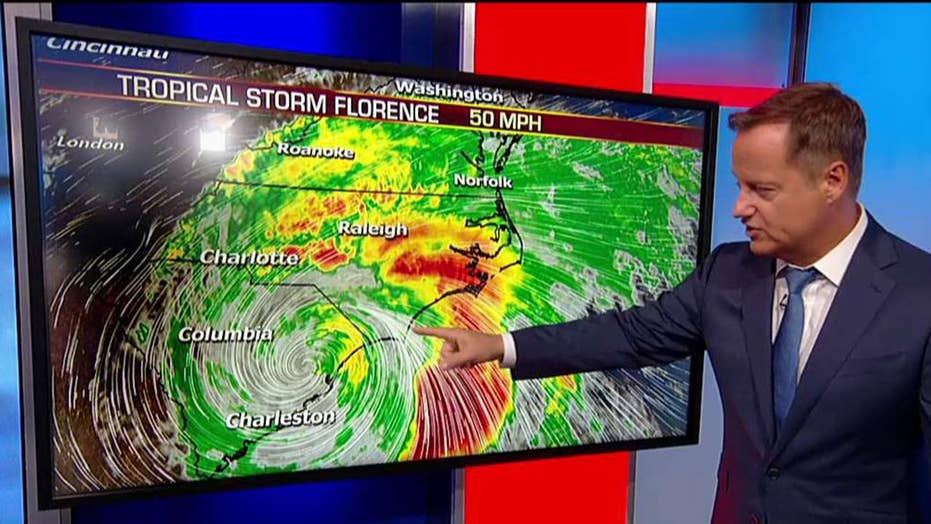
    Weather channels. They're used to provide the audience with a weather report, which is information useful for living.
    Image result for weather channel


    Dependency theory

    1) Do you agree that audiences have become dependent on the media? What evidence or examples can you provide to support your view?

    I agree that audiences have become dependant on the media. Aspects of life that have become essential in society, such as knowing current news events or what the weather is going to be like, have all become very easy access through the internet and TV.

    2) How has the growth of new and digital technology in the last 15 years changed people's dependency on the media? Is this a new problem?

    Due to the smart phone being invented in recent years, there is a constant access to social media, games and communication that people have undoubtedly become dependant on. When the latest news story and notification is so easily accessible, there is the issue of society becoming completely reliant on the media.

    Social media also allows for audiences to give their own inputs on certain issues. Websites such as youtube has provided people with platforms to influence society; people can rise up from nowhere and become hugely impactful. Due to the new emphasis on social media, people have become obsessed with not missing out.

    3) Reflecting on your own media use, how does your media consumption impact on your emotions? Does the media have an overall positive or negative impact on your health and wellbeing? Why?

    Media consumption has both negative and positive impacts on my emotions and wellbeing. Video games are an example of media that provides me with entertainment. Social media such as twitter can be an enjoyable way to interact with friends and funny posts online, yet can also be very draining with the constant conflict and bad news that circulates on the website. I recently discovered an anime that I became obsessed with, which has probably had a negative impact on my wellbeing with how addicted I became to it. Media is also used as an escape to de-stress, yet also can be stressful in itself.

    Monday, 4 November 2019

    MIGRAIN October assessment learner response

    FEEDBACK

    1) Type up feedback in full

    Total = 36 = B

    WWW:
    This is one of the best Autumn assessments I've read - seriously impressive! Real insight shown, confident use of theory to support points, good depth to your analysis.

    EBI:
    > Perhaps just exam technique + timing... you needed a little more for the genre question (another paragraph and more theory - Neale, Chandler, Abercrombie)
    > Q2 could have offered a little more comparison

    2/3) Identify at least one potential point that you missed out on for each question in the assessment.

    Q2:
    > Similar themes of determination
    > Both dressed for an urban environment

    Q3:
    > Neale's repetition and difference: Allows producers to evolve genre + maintain audiences.
    > Abercrombie: "Sound economic sense", "loyal audience"

    Q4:> Preferred: Can trust this magazine, know what they're talking about, trend setters
    > Oppositional: Arrogant, negative black/youth stereotypes, hand gesture = gang sign

    4) Did you get any media terminology or theory wrong in the assessment? Make a note of it here for future revision, including theories/terminology that you could have used but didn't.

    Q3:
    Tolson: genre "mediates between industry and audience
    Neale's repetition and difference
    Schatz's genre of order + intergration
    Abercrombie: "exploit conventions"

    5) Identify your strongest question. Why did you do better on this question?

    Question 1: Full marks. I cited the 3 different narrative theorists and covered a large range of points.

    6) Identify your weakest question. Why did you score lower on this particular task?

    Question 3: I had trouble remembering the specific names and details of genre theories/theorists regarding genre.

    7) Re-write your weakest answer in full (or, if it was the essay question, write out a full essay plan). Use the mark scheme to identify anticipated content you can add to your response and make sure your typed re-draft is a top-level answer.

    Genre is important for media producers as it allows them to exploit the interests of certain audiences and also allows their content to remain interesting. Schatz suggested that genre goes through a cycle; innovation, classical, parody and deconstruction. After media codes are established and repeated for a genre, they begin to become parodies and cliched as the conventions are oversaturated. This is important for media producers as it allows them to consistently create successful media by treading familiar ground that they know is popular.
    Genre is also important in allowing media producers to create a profitable product that attracts an audience: Abercrombie suggests that “television producers set out to exploit genre conventions [as] it makes sound economic sense.” This is further backed up by Neale declaring that “difference is absolutely essential to the economy of genre.” Neale’s theory of repetition and difference suggests that genre allows producers to evolve genre and maintain audiences. Audiences will go into a piece of media with pre-determined conventions and expectations for the genre, such as themes or structure. Chandler called these “conventions of content,” implying that audiences that disliked certain conventions of a genre will know not to consume media of that genre again.


    8) Email your re-written answer (7) to the next person below you on the blog list. Ask them to provide a WWW/EBI response before next Friday and then include this underneath your answer on your blog. 

    WWW: This is an outstanding answer and would certainly be top level - excellent use of your notes and the mark scheme to deliver this!

    EBI: You could potentially discuss the importance of genre for audience pleasures - there is a significant pleasure for audiences in having expectations satisfied which genre allows. Also, make your paragraphs clearer - it will make it easier for examiners to see you have covered all aspects of the question.

    Sunday, 13 October 2019

    Narrative blog task

    1) Give an example from film or television that uses Todorov's narrative structure of equilibrium, disequilibrium and new equilibrium.
    Lord of the rings
    Equilibrium: The beginning exposition shows a peaceful ideal world
    Disequilibrium: The ring is introduced and peace is threatened
    New equilibrium: Peace is restored however some main characters do not return

    2) Complete the activity on page 1 of the Factsheet: find a clip on YouTube of the opening of a new TV drama series (season 1, episode 1). Embed the clip in your blog and write an analysis of the narrative markers that help establish setting, character and plot.


    The setting is established as a company office building through the visual iconography. The lead character, Michael, is introduced in the beginning scene of the pilot. His mannerisms and dialect shape his character as being witty and flippant, mistaking the woman as a man on the phone. He proudly flaunts being the "Regional Manager of the Scranton branch of a paper distribution company", and guides the cameraman through the office building. This further emphasises the setting and easily introduces the style of show The Office is; a comedy series follows the everyday lives of office employees. Through the shaky camera-work and Michael speaking directly to the cameraman, the show is established as a kind of documentary style series that recognises the camera and having an audience. Michael introduces Pam, the secretary, creating a contrast in their personalities that further creates a comedic tone.

    3) Provide three different examples from film or television of characters that fit Propp's hero character role.
    Harry Potter
    Midoriya Izuku - My hero academia
    Maka Albarn - Soul Eater

    4) Give an example of a binary opposition.
    Villain and hero

    5) What example is provided in the Factsheet for the way narratives can emphasise dominant ideologies and values?

    The winner often represents the dominant ideas and values of our culture. When the policeman captures the criminal in a crime drama– the ideology of the value of law and order is emphasised.

    6) Why do enigma and action codes (Barthes) offer gratifications for audiences?
    Conventional narratives offer gratification to the audience. Complications are created with an enigma for the audience. The audience is curious as to what actions will be taken and how problems will be solved.

    7) Write a one-sentence summary of the four different types of TV narrative:
    • Episodic narrative (the series): There are different narrative arcs each episode and each is usually resolved by the end of it.
    • Overarching narrative (the serial): A narrative arc plays out over a series of episodes, and the resolution plays out at the end of the serial.
    • Mixed narrative: A text that uses both episodic and overarching narratives.
    • Multi-strand overlapping narrative (soap narrative): These have a continuous narrative and tell a number of different stories at the same time.
    8) How does the Factsheet suggest adverts use narrative? 
    Adverts set up a problem and immediately offer the solution to create a swift resolution.

    LR


    Name
    First blog task - 10 Questions
    Media Consumption Audit
    Semiotics blog tasks
    MIGRAIN Reading an Image
    Reception theory advert analysis
     Belle


    WWW: Your blog is a joy to read – there’s a real engagement and level of thought that bodes very well for future achievement in the subject. You are already writing in some depth and considering a variety of different possible meanings to texts. The examples you’ve chosen for the Semiotics task are excellent and I really like the amount of thought and reflection in your initial 10 questions. The only criticism would be that you strike me as the perfect candidate to thrive at university so I’d encourage you to think about that possibility over the next year or so!

    EBI: In terms of areas to improve, I would look at your media consumption audit as a starting point. It’s clear that you already have a level of political understanding (based on your Brexit comments) and consume a variety of different types of media. However, I do think that you could be more specific in how you plan to develop in this area and I encourage you to start reading newspapers regularly (even if this is online) and also explore the potential of podcasts. Finally, your Semiotics post was a little later than the deadline so one area we should keep an eye on is organisation, workload and meeting deadlines.

    LR: Reflect on your work in A Level Media so far. What is your strongest piece of work? What is your weakest? What specific skills or knowledge do you need to develop over the rest of the course?

    Response:
    I think my strongest piece of work is my Genre blog task, and my weakest is my media consumption audit. I think I need to brush up on remembering certain theories regarding genre and also the names of theorists.

    Tuesday, 8 October 2019

    Genre blog tasks

    Media Factsheet 03 - Genre: Categorising texts


    1) What example is provided of why visual iconographies are so important?
    Visuals of deep space are linked to the sci-fi genre and modern mise-en-scene combined with a person sitting behind a desk and high key lighting connote news broadcasts: so iconography helps identity genre.

    2) What examples are provided of the importance of narrative in identifying genre?
    Soap operas and sit coms have similar visual iconograpghies, characters and problems such as struggling with your boss at work, however the way the narrative progresses through how the characters deal with those problems would be different.

    3) What is the difference between character representation in action movies and disaster movies?
    Action heroes are isolated from other people, whereas disaster movies place the hero role on a group of people.

    4) What are the different ways films can be categorised according to Bordwell? 
    Period or Country, e.g. US films of the 1930s
    Director / Star, e.g. Ben Stiller Films
    Technical Process, e.g. Animation
    Style, e.g. German Expressionism;
    Series, e.g. Bond;
    Audience, e.g. Family Films

    5) List three ways genre is used by audiences.
    They use prior knowledge to decide if they will like the genre of not
    They can compare the text to other texts of the same genre.
    They can reject the media text according to the genre if they don't like it.

    6) List three ways genre is used by institutions or producers.
    Genres can have loyal fan base so it easier for them to attract an audience
    Genres are paradigms or templates media producers can follow.
    Its easier to market the media text to those who prefer the genre

    7) What film genre is used as an example of how genres evolve? What films and conventions are mentioned?
    The gangster genre. The sopranos, reservoir dogs and scarface were examples mentioned and a convention is a tommy gun hidden inside of a violin case - after a while it became cliche.

    Media Factsheet 126 - Superheroes: A Genre Case Study


    1) List five films the factsheet discusses with regards to the Superhero genre.
    The X Men Franchise
    The Avengers and its Franchise:Iron Man,Thor,The Hulk
    Spider man
    Guardian of the Galaxy
    Agents of Shield

    2) What examples are provided of how the Superhero genre has reflected the changing values, ideologies and world events of the last 70 years?
    X Men (1, 2 and 3)
    Wolverine (1 and 2)
    Spider-Man (1, 2 and 3)
    Batman, Batman Returns,
    Batman Forever
    Batman and Robin

    3) How can Schatz's theory of genre cycles be applied to the Superhero genre?
    Innovation: genre codes are first established. The first superhero comics establish the idea of a character with superpowers saving the world and fighting against villains. The presentation of the genre in moving picture are established when being adapted to tv and film.
    Classical: codes and conventions are repeated in film.
    Parody: 1966's Batman was intentionally camp and funny; the audience weren't meant to take the superhero seriously.
    Deconstruction: 1978's Superman started a new cycle with technology leading the innovation with special effects and creating more realistic visuals.


    My own genre analysis


    Jojo's bizarre adventure
    Image result for jojo's bizarre adventure all jojo's

    General

    1) Why did you choose the text you are analysing?
    It's my favourite TV series of all time. The series is very strange, constantly surprising you with what the mangaka gets away with. For example, if the author wants to show that a character is a bad person, he will have them kill a dog (This happens a lot...).

    2) In what context did you encounter it?
    I had been exposed to many memes online regarding it and had heard about it through friends. It's an old and very popular anime series and so, as I got into anime, I naturally became interested in it. The 5th part in the anime adaption was being animated and thus spawned more very popular clips that I came across and was very intrigued by.

    3) What influence do you think this context might have had on your interpretation of the text?
    I had seen a clip from the 5th part of the series which takes plays hundreds of years after the first part, and so the initial tone and pace of the series was much different from what I expected. However, through the often parodied nature of the series I assumed I would find it very memorable. The series is infamous for being referenced in many media, including anime and western cartoons, so I already vaguely knew of the somewhat comedic and bizarre narrative of the series.

    4) To what genre did you initially assign the text?
    Shonen; Action-adventure. Interestingly, the genre shifts between parts in the series, such as part 1 adapting a more Gothic-Victorian horror genre compared to the later parts. There is an inherent focus on the supernatural throughout the entire series, with the first main antagonist being a vampire to the ghostly beings that represents a character's soul (called a stand) that are introduced in the 3rd part of the series.

    5) What is your experience of this genre?
    I had watched anime such as soul eater and My hero academia, both shonen action series, previous to watching jojo. It's definitely one of my preferred genres along with comedy.

    6) What subject matter and basic themes is the text concerned with?
    Fighting against a main villain to either save the world or stop a corrupted gang leader, the themes vary throughout the parts. However, each part focuses on fate, good vs evil and supernatural forces.

    7) How typical of the genre is this text in terms of content?
    As Jojo could be considered a series that established some conventions of the shonen action genre, it's fairly typical. The amount of fighting and the presence of a main character and main villain in each part definitely fits the genre.

    8) What expectations do you have about texts in this genre?
    Fighting, power escalation, high stakes, a main villain and main hero, a rival character, and the sexualisation of female characters.

    9) Have you found any formal generic labels for this particular text (where)?
    By it's nature or being in shonen jump magazine, it's given the generic label of a shonen manga series. The offical website categorises it as adventure, fantasy and supernatural.
    10) What generic labels have others given the same text?
    Comedy (this series will definitely make you laugh), tragedy (this series will definitely make you cry)

    11) Which conventions of the genre do you recognize in the text?
    Fighting, superpowers, a main hero and main villain.

    12) To what extent does this text stretch the conventions of its genre?
    In part 4, for example, instead of taking place over many different locations around the world, takes place in a single town for the entire part. With less of a focus on adventure and more on mystery(as the main characters try to find out the identity of a serial killer while trying to live their normal lives) the mangaka challenges one of the focal genre's of the series.

    13) Where and why does the text depart from the conventions of the genre?
    Each part is a different story-arc focusing on a different main character (each related to each other) in a new location, with new themes, stakes and villains. The series, although always having fighting and action, strays from the adventure genre in some parts.

    14) Which conventions seem more like those of a different genre (and which genre(s))?
    The mangaka also likes to delve into the thriller/horror genres, drama, western, crime and mystery.

    15) What familiar motifs or images are used?
    The star is used as a representation of the main character's lineage - as they are all related through blood to each other - and bonds them together. This comes from the first protagonist's name being Joseph Joestar, and him having a star-shaped birth mark on his neck that each Jojo shares.

    Mode of address

    1) What sort of audience did you feel that the text was aimed at (and how typical was this of the genre)?
    Teenage boys and young men. The magazine that Jojo was published in - Shonen jump - is a magazine targeted at teenage boys. However, in 2005 the magazine the manga is published in changed to ultra jump seinen magazine. This magazine was aimed more at young men than teenage boys.

    2) How does the text address you?
    Although i'm not within the target audience, many of the protagonists and characters are teenagers and so there is a way I can project myself onto them.

    3) What sort of person does it assume you are?
    A good person, as the main characters are fighting against an evil force in every part. It assumes you're smart, as it doesn't spoon feed you the plot. There are many mature themes in the show, such as murder, rape and crime, so it assumes you're mature.

    4) What assumptions seem to be made about your class, age, gender and ethnicity?
    The assumption is that the consumer is a Japanese teenage boy to young man. Almost all the main characters are male and incredibly buff, presenting a kind of power fantasy for the target audience. There are often fan service scenes where the female characters have their bodies flaunted. Although, especially later in the series, there are many strong female characters introduced and the main character for the 6th part is female. This perhaps shows an evolution in who the target audience is. Interestingly. since the beginning of the series there have been homo-erotic undertones and the male characters are all conventionally attractive, showing that the series has always been... inclusive in who it's targeted at.

    5) What interests does it assume you have?
    Action, fighting and battles.
    The bizarre and the supernatural.
    Relationships between friends, family and partners.
    Death and tragedy.

    Relationship to other texts

    1) What intertextual references are there in the text you are analysing (and to what other texts)?
    The mangaka, Araki, is a huge fan of western music. There are lots of characters named after western musicians and their music, (such as foo fighters, queen, jimi hendrix and many more) with certain characters being influenced aesthetically as well.

    2) Generically, which other texts does the text you are analysing resemble most closely?
    My hero academia and Fist of the north star 

    3) What key features are shared by these texts?
    Fist of the north star's masculine character deigns and archetypes are very similar to jjba. The brutal and bizarre violence of the series also matches jjba's very creative action scenes. Fotns is illogical and fun, definitely matching the tone of jjba.
    My hero academia is similar in the supernatural elements that both series share. The extent of creative superpowers and abilities match closely to jjba, where superpowers are common throughout the series.

    4) What major differences do you notice between them?
    Jjba changes the main protagonist each part, following the descendants of the first jojo. Fist of the north star's central protagonist fights many rivals throughout the series, however jjba has a focus on one villain for each part that the protagonist has to face at the end.
    My hero academia's setting is completely different, as it stays within the bounds of Japan and the school that the characters attend.